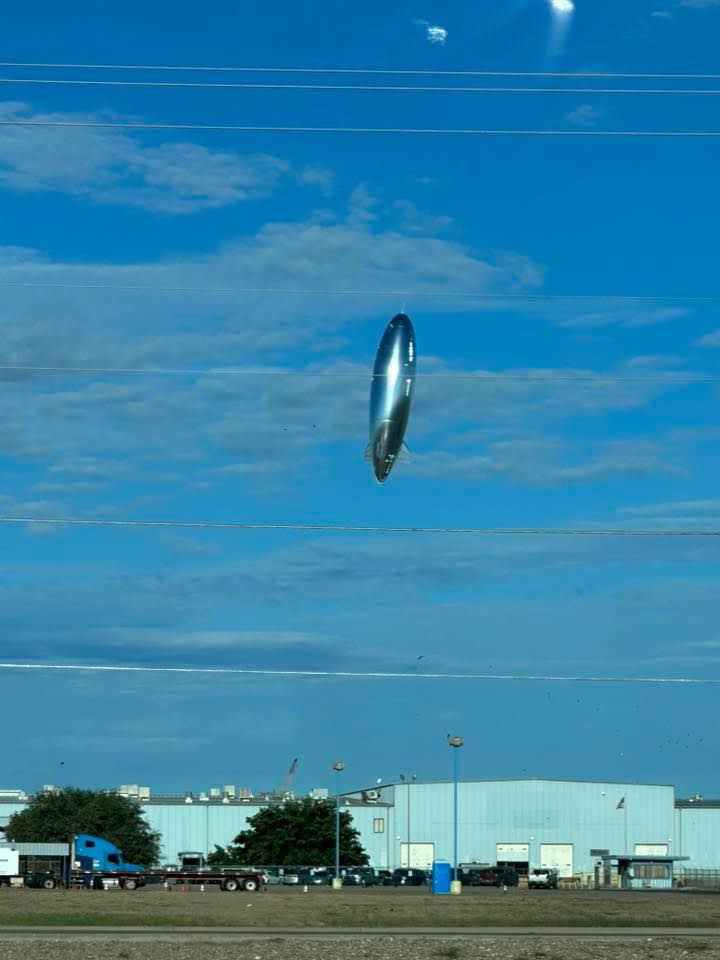
How Sceye's Stratospheric Airships Monitor Greenhouse Gases
1. The Monitoring Gap is Bigger than a lot of people think.
The greenhouse gases that are produced globally can be tracked with a mix of ground stations as well as occasional flights by aircraft, and satellites operating for hundreds of kilometres above the ground. Each one has its limitations. Ground stations are sparse and geographically oriented toward wealthy countries. Aircraft operations are costly in duration, are short-term, and limited in their coverage. Satellites can reach the world, but struggle with the spatial resolution needed to pinpoint specific emission sources, such as leaky pipelines, a landfill venting methane industrial facility not reporting its output. The result is surveillance systems with significant problems at the exact magnitude where accountability & intervention have the greatest impact. Stratospheric platforms are increasingly being considered to be the unreachable middle layer.
2. High Altitudes Provide a Monitoring Advantage Satellites Aren't Able to Replicate
There's a reason in geometry the reasons why 20 km is better than 500 kilometres for emissions monitoring. A sensor operating from stratospheric altitude can detect a ground footprint of up to a hundred kilometres while still being close enough be able to distinguish emission sources in a meaningful resolution — each facility and road corridors as well as agricultural zones. Satellites observing the same region from the low Earth orbit are able to cover it more quickly but with fewer granularity and the times to revisit mean that a methane gas plume that emerges and fades away in a matter of hours won't be captured at all. A device that stays above a target area for a period of days or weeks at a time turns intermittent snapshots into continuous surveillance.
3. Methane is the first priority target for good reason
Carbon dioxide gets most of the public attention, but methane is the greenhouse gas in which close-to-term monitoring improvements could bring the biggest practical difference. Methane's toxicity is greater than CO2 over the course of a 20-year period and a significant portion of methane emitted by humans comes through point sources — pipelines for oil and gas such as waste facilities, agriculture, and other activities that can be detected and, often, repairable once identified. Monitoring methane in real-time from an ongoing stratospheric platform ensures operators, regulators, and government agencies can see leaks right as they happen, rather than finding them in the months following annual inventory reconciliations, which typically rely on estimates instead of measurements.
4. The Sceye Airship's Design Is Affitting to the Monitoring Mission
The traits that make for the best telecommunications platforms and an excellent environmental monitoring platform intersect more frequently than you think. Both require long endurance stability, stable positioning, and significant payload capacity. Sceye's airship design is lighter than air and solves all three. Because buoyancy performs the essential mission of keeping the aircraft aloft its energy budget doesn't go to generating lift that it can be used for propulsion and powering the sensor needs to be used for the mission. For monitoring of greenhouse gases in particular it's necessary to carry imaging systems, spectrometers, as well as data processing hardware that doesn't have the severe weight restrictions that limit fixed-wing HAPS designs.
5. Station Keeping is a Non-Negotiable Activity for Useful Environmental Data
A platform for monitoring that is constantly drifting is a platform for monitoring, producing data that is difficult to understand. Knowing exactly where a sensors was when it logged a reading is vital to attribute that reading to the source. Sceye's emphasis on station keeper — a person who holds in a predetermined position above a specified area via active propulsion it's not just an arbitrary performance measure. It's what makes the information scientifically valid. Stratospheric earth observations only become effective for regulatory or legal purposes when the positional record is secure enough to stand to scrutiny. Drifting balloon platforms no matter how competent their sensors are, won't offer this.
6. The same platform could monitor Oil Pollution and Wildfire Risks ad-hoc
One of the most exciting aspects of the multipayload approach is the fact that naturally, different environmental monitoring tasks complement each other within an identical vehicle. Airships that operate over coastal or offshore regions can contain sensors geared towards the detection of oil pollution in addition to monitoring methane and CO2. Over land, the same platform architecture allows for wildfire detection technology — identifying heat signatures, smoke plumes and stress indicators for vegetation that can be used to predict ignition events. Sceye's design approach to mission development takes these into consideration not as separate programmes requiring separate aircraft but as a parallel use case for infrastructure already placed and operating.
7. The ability to detect Climate Disasters during real time changes the Response Equation
There's a meaningful difference between knowing that a wildfire began 6 hours ago versus knowing that it started just 20 minutes ago. Similar is true for industrial accidents that release toxic gases, floods that are that could threaten infrastructure or sudden methane releases from permafrost. Detecting climate disasters in real timing from a recurrent stratospheric network gives emergency officials, government agencies, and industrial operators a window for intervention that simply does not have when monitoring is dependent on satellite revisit cycles or ground-based reports. The significance of that window grows when you consider that the initial stages that are the most common environmental emergencies crucial to intervene in when intervention is most efficient.
8. Its Energy Architecture Makes Long Endurance Monitoring Possible
Monitoring of environmental conditions only provides their maximum value when the platforms remain on station long enough to build real-time data records. One week of methane levels across an oil field can tell you something. Months of continuously collected data will tell you something real-time and actionable. The ability to sustain that endurance is dependent on solving problems with energy during the nightthat is, the platform needs to conserve enough energy during daylight hours to run any system during the night without affecting position or the operation of sensors. The advancements in lithium-sulfur battery chemistry that have energy density of around 425 Wh/kg, and improving solar cell efficiency, are what makes a closed power loop attainable. Without both, endurance is only an aspirational rather than being a standard.
9. Mikkel Vestergaard's History Explains the environmental significance of the
It's important to know why a space-based company like Sceye puts such prominent emphasis on greenhouse gas monitoring and disaster detection rather than solely focusing on connectivity revenue. Mikkel Vestergaard's record of using technology to tackle large-scale environmental and human-related issues gives Sceye its ethos that is reflected in the goals that the company prioritizes, as well as how the platform is presented. The capabilities for monitoring the environment aren't simply a payload grafted onto the appearance of a vehicle that's telecoms ethically minded. They express a real belief that the stratospheric structure should be conducting climate work, and this platform is able to accomplish both without compromising any one of them.
10. It is important to understand that the Data Pipeline Is as Important as the Sensor
Recording greenhouse gas readings through the stratosphere is not all the matter. getting that information to individuals who require it in a format they can take action on, in a manner similar to real-time is the second part. A stratospheric system with onboard processing capabilities and direct access to ground stations will reduce the gap between detection and determination significantly when compared to systems that store data to be later analyzed. For applications that manage natural resources like regulatory compliance monitoring or emergency response, the timeliness of the data is often just as accuracy. Incorporating that data pipeline into your platform's framework from the beginning, instead of using it as a last resort is what distinguishes serious stratospheric observation from other sensor projects that are merely experimental. Read the most popular sceye connectivity solutions for blog advice including space- high altitude balloon stratospheric balloon haps, softbank sceye partnership, Solar-powered HAPS, Closed power loop, Stratospheric infrastructure, softbank haps pre-commercial services 2026 japan, Mikkel Vestergaard, investment in future tecnologies, sceye haps softbank partnership, sceye services and more.

Natural Disaster And Wildfire Detection From The Stratosphere
1. The Detection Window is the Most important thing you can extend
Every major disaster has a moment — sometimes measured in minutes, sometimes in hours — when a quick awareness would have changed the course of action. A wildfire that is discovered when it covers a quarter of hectare is an issue with the containment. A fire that is detected when it covers fifty hectares is a catastrophe. A gas leak in the industrial sector that is detected within the first two hours is usually able to be stopped before it becomes an immediate public health emergency. The same release was found three hours later, through a ground report or a satellite passing overhead during its scheduled visit, has already become a problem that has no clear solution. A broader detection window is one of the best feature that improved monitoring infrastructures can deliver, and persistent stratospheric observation is among the few ways to alter the window effectively rather than slightly.
2. It is becoming harder for wildfires To Monitor With the Existing Infrastructure
The intensity and frequency of wildfires in recent years has outpaced the monitoring infrastructure created to monitor the fires. Sensors on the ground- alarm towers, sensor arrays ranger patrols, and watchtowers — have a limited coverage and operate and are not fast enough to stop rapid-moving fires, particularly in their initial stages. Aircrafts' response is effective, but costly, weather dependent as well as reactive rather than anticipatory. Satellites travel through any site on a schedule calculated in hours, which means a fire which ignites to spread, then gets a crown, and continues to grow between passes doesn't provide early warning. The combination as well as faster spread rates triggered due to drought and increasingly complex terrain creates monitoring gap that traditional approaches cannot close structurally.
3. Stratospheric Altitude Provides Persistent Wide-Area Visibility
A platform that is operating at a height of 20 kilometres above surface has the ability to provide uninterrupted visibility across a footprint of ground that spans hundreds of kilometers which includes areas of high risk for fire, coastlines as well as forest margins and urban interfaces, all without interruption. Like aircraft, it doesn't need to return for fuel. In contrast to satellites, it doesn't disappear in the horizon after the basis of a revisit cycle. For wildfire detection in particular, this wide-area, continuous view indicates that the system is monitoring when fires start, monitoring as the fire's initial spread begins, as well as monitoring as the fire's behavior changes — providing a continuous stream of data rather than a series of disconnected snapshots that emergency managers must interpolate between.
4. Temperature and Multispectral Sensors can detect fires Even before smoke is visible.
Some of the best methods for detecting wildfires isn't waiting to see visible signs of smoke. Thermal infrared sensors identify heat anomalies that suggest ignition before the fire has left any visible evidence It can identify hotspots among dry vegetation and smouldering burning under the forest canopy and the initial signs of heat that fires are beginning to take shape. Multispectral imagery adds additional functionality by detecting changes in vegetation condition, such as stressing on the moisture burning, drying, browningwhich can indicate an increase in threat of fire in a particular area before any ignition event occurs. A stratospheric platform carrying this sensor set-up provides early warning of active ignition and a predictive insight into where the next ignition is likely to occur, which is a qualitatively different type of awareness of the situation than traditional monitoring.
5. Sceye's Multi-Payload Strategy Combines Detection with Communications
One of the most common complications of major disasters that the infrastructure people depend on to communicate — mobile towers, power lines, internet connectivity — are typically among the first to be destroyed or overwhelmed. A stratospheric platform with both the sensors to detect disasters and a telecommunications payloads tackle this issue from a single vehicle. Sceye's mission-oriented approach is to consider connectivity and observation as complimentary functions, not as competing one, so the identical platform that detects emerging wildfire will also be able to provide emergency communications to personnel on the ground, whose terrestrial networks are dark. The cellphone tower in the sky does more than just observe the disaster and keeps the people in touch via it.
6. Deterrence Detection Expands Far Beyond Wildfires
Although wildfires are one the most compelling reasons for a continuous stratospheric monitoring system, the same capabilities of the platform are applicable to a wider range of disaster scenarios. Flood events can be tracked in the course of their development across ocean zones and river systems. Earthquake aftermaths — which include the deterioration of infrastructure, blocked roads as well as displaced peoplecan benefit from a rapid, wide-area assessment that ground teams do not offer in a timely manner. Industrial accidents releasing poisonous gases or oil pollution into coastal waters generate signatures easily detectable by the appropriate sensors from the stratospheric height. Monitoring climate disasters in real time across all kinds of climates requires a system that is always on continuously monitoring, and able to distinguish between typical variations in the climate in addition to the indications of upcoming emergency situations.
7. Japan's Disaster History Makes the Sceye Partnership Especially Relevant
Japan has a high proportion of the world's seismic occasions, experiences regular typhoon seasons affecting populated coastal regions, and also has been the victim of numerous industrial disasters needing a swift response from environmental monitors. The HAPS collaboration in between Sceye and SoftBank, targeting Japan's nationwide network, and precommercial services until 2026, lies at the crossroads of the stratospheric network and disaster monitoring capability. A nation that has Japan's level of disaster exposure and its level of technological proficiency is arguably the ideal early adopter for stratospheric infrastructure, which combines the resilience of coverage with real-time monitoring — providing both the critical communications infrastructure that can be relied upon for disaster relief as well as the monitoring layer that early warning systems need.
8. Natural Resource Management Benefits From the Same Monitoring Architecture
The sensors and the persistence capabilities used by stratospheric platforms in the fight against wildfires and natural disasters have direct applications in natural resource management. They work over longer periods of time, but need similar monitoring continuity. Monitoring forest health — tracking spread of diseases such as illegal logging or changes — benefit from an ongoing monitoring system that detects slow-developing hazards before they reach acute. Water resource monitoring across vast catchment areas, coastal erosion tracking, as well as the monitoring of protected areas from interference all have applications where a stratospheric platform watching continuously provides actionable information that regular aerial or satellite surveys can't be replaced cost-effectively.
9. The Founder's Mission is the Basis for Why it is so important to detect disasters.
Understanding the reasons Sceye is so focused on environmental monitoring and detecting disasters and monitoring of environmental conditions — rather than looking at connectivity as the sole purpose and monitoring as a secondary benefit -must be able to comprehend the founding perspective that Mikkel Vestergaard provided to the company. A background in applying advanced technology to massive humanitarian issues creates a different set of priority for design than a solely commercial telecommunications company would. The ability to detect natural disasters isn't installed on a connectivity device as a feature that can be added value. It's a result of a belief in the fact that stratospheric infrastructure is actively used in cases of issues — climate emergencies, environmental disasters emergency situations that require prior and more reliable information impacts the outcome for the affected population.
10. Continuous Monitoring changes the relationship Between Data and Decision
The more fundamental shift that stratospheric detection of disasters enables does not just provide faster response to events that occur in isolation, but rather a change in the way that decision-makers view environmental risks across time. When monitoring is intermittent decision-making about resource deployment the preparation for evacuations, as well as infrastructure investments must be taken under the hazard of uncertainty over how the conditions are. When monitoring is continuous it is a matter of reducing that uncertainty. Emergency managers working with a real-time data feed from an ongoing stratospheric platform over the region they are responsible for take decisions from a entirely different viewpoint than those who are relying on scheduled satellite passes and ground reports. That shift — from periodic snapshots to constant state-of-the-art awareness is the main reason why stratospheric observation of earth through platforms like those created by Sceye truly transformative, rather than infrequently beneficial. Take a look at the most popular HAPS technology leader for website recommendations including sceye haps airship payload capacity, Monitor Oil Pollution, space- high altitude balloon stratospheric balloon haps, SoftBank investments, sceye haps project status, sceye new mexico, Cell tower in the sky, softbank sceye haps japan 2026, Stratospheric telecom antenna, solar cell efficiency advancements for haps or stratospheric aircraft and more.